 By
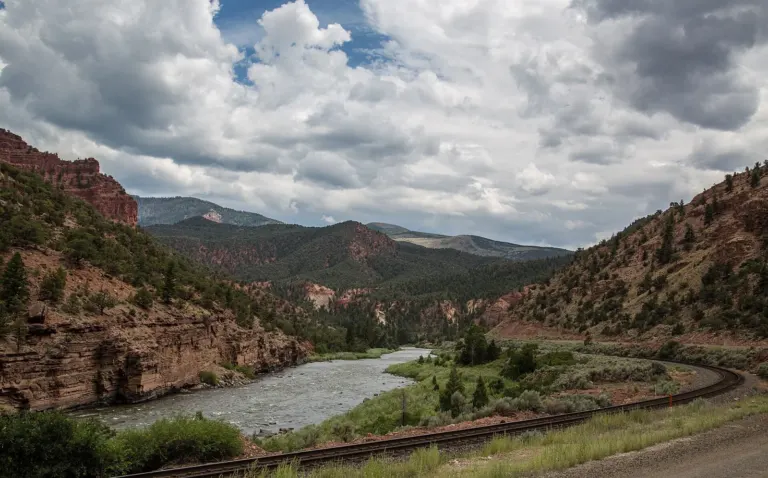
Photo: Tony Webster / Wikimedia Commons, CC BY 2.0
The Western is usually thought of as a novel or a film, but some of the genre’s best and most influential work came in short form. Several of the stories that defined the West in the popular imagination first appeared in magazines and were later gathered into books. Here are collections worth looking for, roughly in historical order.
The 19th-century foundations
- Bret Harte, The Luck of Roaring Camp and Other Sketches (1870). Harte’s California mining-camp stories, including the title story and “The Outcasts of Poker Flat,” set the template for the sentimental frontier tale.
- Owen Wister’s stories. Before The Virginian, Wister published Western stories in magazines, later collected in books such as Red Men and White (1895). Wister spent time in Wyoming, and it shows.
- Stephen Crane, “The Bride Comes to Yellow Sky” and “The Blue Hotel.” Two of the sharpest Western stories ever written, both widely anthologized and both skeptical of the myths that were forming around the frontier.
The mid-century masters
- Dorothy M. Johnson, Indian Country (1953) and The Hanging Tree (1957). Johnson, a Montana writer, wrote “A Man Called Horse” and “The Man Who Shot Liberty Valance,” both of which became films.
- Jack Schaefer’s short fiction. The author of Shane also wrote many stories, gathered in collected editions.
- The Complete Western Stories of Elmore Leonard (2004). Before he became a crime novelist, Leonard wrote Westerns, including the stories behind 3:10 to Yuma.
- The Collected Short Stories of Louis L’Amour. A multi-volume set gathering the magazine work of the most widely read Western writer.
The modern West
- Annie Proulx, Close Range: Wyoming Stories (1999). Proulx’s Wyoming stories, including “Brokeback Mountain,” are harsh, funny and specific to the state’s ranch country. She followed it with Bad Dirt (2004) and Fine Just the Way It Is (2008).
- Anthologies edited by Bill Pronzini and Martin H. Greenberg. The pair edited dozens of themed Western anthologies, and they are a reliable way to sample many writers at once.
Where to find them
Most of these titles are in print or easy to find used, and many of the older stories are in the public domain. The region’s public libraries and the University of Wyoming’s Coe Library are good places to start. For full-length books, see our list of Western novels worth reading.
Information for this story comes from Publisher and Library of Congress catalog records for each title; Western Writers of America.